 The Lilac Post
History
How Lake Michigan water came to Lombard
Wells served the village until the 1955 Tree Towns Commission led to the DuPage Water Commission; lake water has flowed since 1992, and District 450 main work is next.
By The Lilac Post · Lombard · Tuesday, November 24, 2026
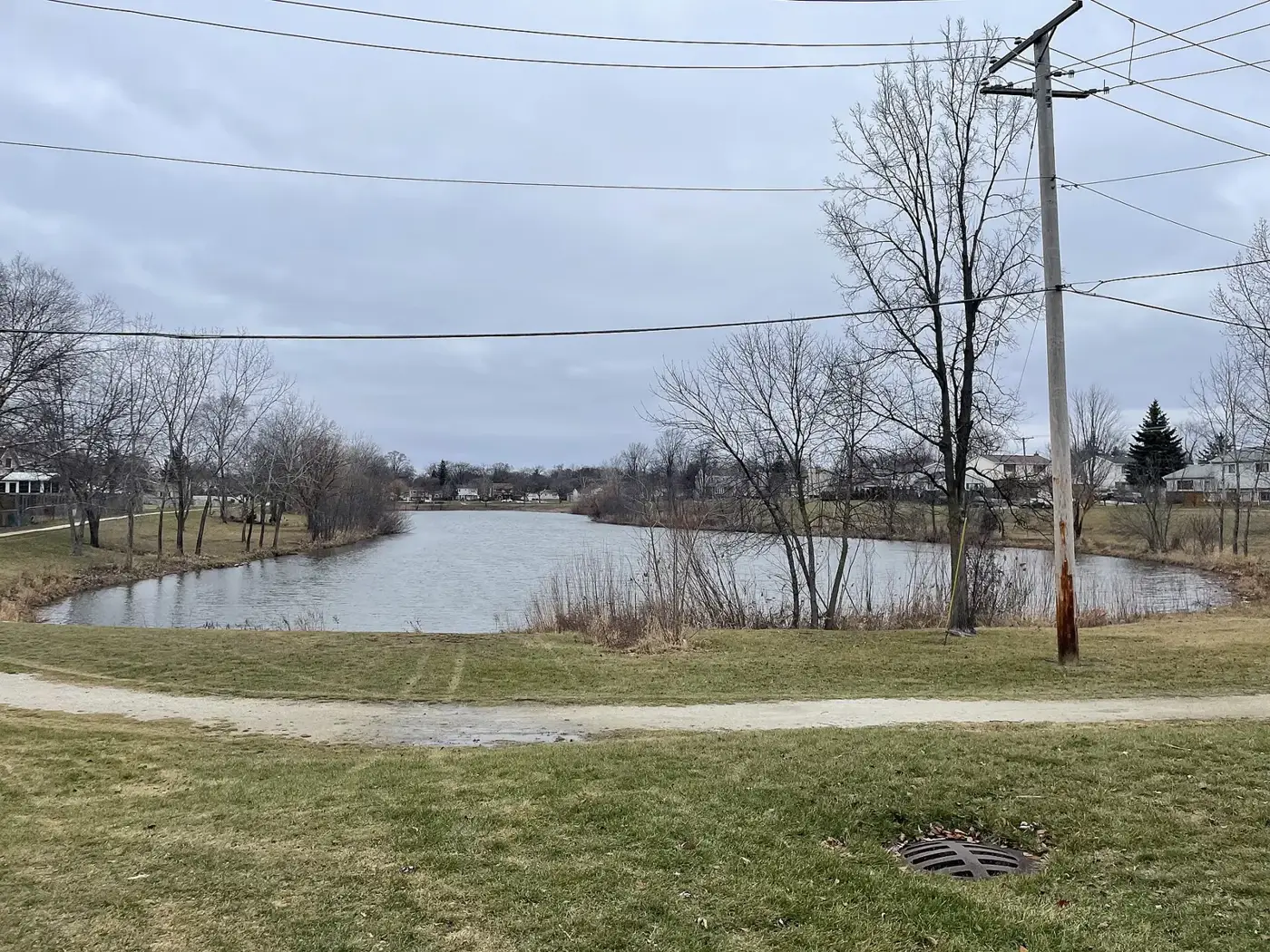
Every day the Village of Lombard supplies more than 4 million gallons of fresh water that exceeds Environmental Protection Agency requirements. That water comes from Lake Michigan. Chicago treats it, and the DuPage Water Commission transmits it to the village, the village says.
By the mid-1950s, DuPage County’s growing population was drawing groundwater from deep and shallow wells faster than nature could replenish it, the DuPage Water Commission recounts on its history page. The quality of that ground water did not always meet regulatory standards. Municipalities only about 20 miles from the lake began investigating the feasibility of obtaining Lake Michigan water.
In 1955 the Tree Towns Commission was formed to oversee creation of a system that would supply Elmhurst, Lombard and Villa Park with lake water. Short-term groundwater sources in DuPage and resistance to the withdrawal of lake water hindered progress for more than 20 years. Requests to state and federal bodies for alternative, dependable resources continued.
Those efforts ultimately led to the formation of the DuPage Water Commission. In 1980 the State of Illinois Department of Transportation, Division of Water Resources—the regulatory body responsible for control of Lake Michigan’s water use—granted many of the county’s municipalities an allocation of lake water.
In March 1984 the Commission signed a 40-year agreement to buy water from the City of Chicago for redistribution in DuPage County. The Water Commission Act of 1985 gave the Commission the authority to finance, design, construct and operate a Lake Michigan-to-DuPage County water supply system. In 1986 the Commission entered into wholesale Water Purchase Agreements with 23 DuPage County municipalities and began construction of the second-largest water supply system in the State of Illinois.
The Commission went into full operation on May 1, 1992. Today Lombard obtains its drinking water from Lake Michigan. The lake water is treated by Chicago and transmitted to the village by the DuPage Water Commission. The village adheres to all Illinois Environmental Protection Agency standards and regulations, including an annual Water Quality Report.
Pretreated finished water is received from the DuPage Water Commission via the City of Chicago’s Jardine Water Purification Plant, which the village’s 2023 Water Quality Report describes as the largest conventional water treatment plant in the world. Treated water leaves the Jardine Plant and flows to pumping stations. The DuPage Pumping Station houses the administrative offices of the DuPage Water Commission and its nine distribution pumps with a capacity of 185 million gallons of water per day. Pre-treated finished water is pumped from that station to Lombard and other municipalities right to the tap.
The Underground Utilities Division of Public Works is responsible for all portions of the water system except the receiving and pumping stations, which are maintained by the Water Treatment/Wastewater Pumping Division. If a water main break is suspected, the village asks residents to contact Public Works at (630) 620-5740.
The next chapter for the local system is the Underground Utility Improvements project in District 450. Design engineering began June 1, 2026, with Baxter & Woodman Consulting Engineers under a $1,095,000 contract funded from the Construction Fund. The firm has completed the topographic survey and the survey of all underground structure inverts, pipe materials and pipe diameters in the project area; a geotechnical consultant finished pavement core evaluations. Preliminary design plans are anticipated by August 1 for village staff review, with final design plans expected by September 1. Design engineering is to be completed at the end of summer 2027, the village page says.
Construction is planned in four phases to limit disturbance. The first phase would begin in spring 2028, with the remaining phases continuing through fall 2032. The work is within the District 450 area, generally bounded by Parkside Avenue on the north, Madison Street on the south, and Grace Street and Main Street on the east and west.
The project includes design of new, appropriately sized watermain and replacement of the necessary lead services. It is also anticipated to include limited structural rehabilitation of the existing sanitary sewer system—primarily cured-in-place pipelining with targeted point repairs—evaluation and remediation of critical storm sewer deficiencies, roadway patching and restoration of disturbed landscaped areas. The current infrastructure is reaching the end of its service life and must be upgraded to meet current village standards. Replacement of the watermain will increase water flow and expand the network’s capacity to convey water, and will replace residential lead water services, the village says.
A public information meeting is planned for late fall or winter 2027 to inform residents of what to expect during construction and the scope of work in the right-of-way. Periodic newsletters and notices go to properties in the project area. Water and sewer service will not be affected until construction starts. The village purchases its water from the City of Chicago through the DuPage Water Commission; as Chicago raises rates, the village adjusts its own rates to cover wholesale costs, operations and planned capital improvements.
Free email launch list
Keep up with Lombard
Join the free launch list for Lombard news, useful deadlines, and weekend plans. Email delivery is coming soon; the Sunday edition is already free to read online.
By signing up, you agree to receive the launch announcement and future emails from The Lilac Post. Email delivery has not started yet. Unsubscribe in any email. Privacy policy.
Read the latest Sunday editionSupport The Lilac Post
The Lilac Post is free and independent. If it helps you keep up with Lombard, a small tip keeps it going.
Support The Lilac Post